Honeycomb Board, Cargo Boxes & Paper Pallets from Malaysia: A Global Buyer's Guide
For importers and exporters worldwide: what the three honeycomb products actually do for your P&L, your ESG report, and your customs paperwork — and how they reach you from Malaysia.
If your business ships goods internationally, three paper products made in Malaysia can quietly change your cost structure: honeycomb board, honeycomb cargo boxes, and honeycomb paper pallets. All three are built from the same engineered material — kraft paper formed into hexagonal cells and laminated between flat liners.
This guide covers what buyers outside Malaysia most often ask us: what the products do commercially, what they do for ESG reporting, how far they can be customized, and how export from Malaysia to your country actually works.
Three products, one business case
Honeycomb board is the raw building block: rigid sandwich panels used as layer pads, dividers, edge protection and structural packaging parts. Hexagonal geometry gives it plywood-class rigidity at a fraction of the weight.
Honeycomb cargo boxes replace wooden crates for machinery, electronics, furniture and project cargo. They carry crate-level duty at up to 80% less weight, with no nails or splinters to damage goods or hands.
Honeycomb paper pallets weigh around 5kg against roughly 25kg for wood. On air freight at typical rates, that saves in the region of US$90 per pallet position — and because processed paper is biologically inert, every one of these products is fully exempt from ISPM-15. No heat treatment, no fumigation, no IPPC stamps, no phytosanitary paperwork, in any destination country.
The ESG case your board can actually report
Honeycomb is one material — kraft paper with water-based adhesive — so it enters the ordinary paper recycling stream that exists in every developed market. Your customers dispose of it free, and your packaging line moves from "landfilled" to "recycled" in sustainability accounting.
Under extended producer responsibility schemes and the EU's PPWR, packaging fees are priced by material and recyclability. A mono-material recyclable spec sits in the lowest fee bands and is straightforward to declare on compliance filings and customer ESG questionnaires.
The weight reduction compounds the story: less packaging mass moved per shipment means measurably lower freight emissions per unit delivered — a packaging-driven Scope 3 improvement you can quantify from your own shipping records.
Customized to your requirements, not a catalogue
Everything we make is produced to specification. Cell size (roughly 8-25mm), core thickness (from about 10mm upward), paper grammage and liner grade are production parameters tuned to your load — from lightweight void fill to pallets carrying industrial machinery.
Boxes and pallets are built to your dimensions, including rack-compatible and container-optimised footprints. Die-cut fitments, corner blocks and edge protectors are shaped to your product profile. Moisture-resistant coatings or PE lamination are available for humid routes, and kraft liners take print for branding.
The process is simple: send cargo weight, dimensions, stacking plan and transit route. Our engineers return a specification and quote, and a sample kit with multiple densities lets your team test before committing. We work with customers in English, Malay, Chinese, and with translated support in other languages.
Exported from Malaysia to any country
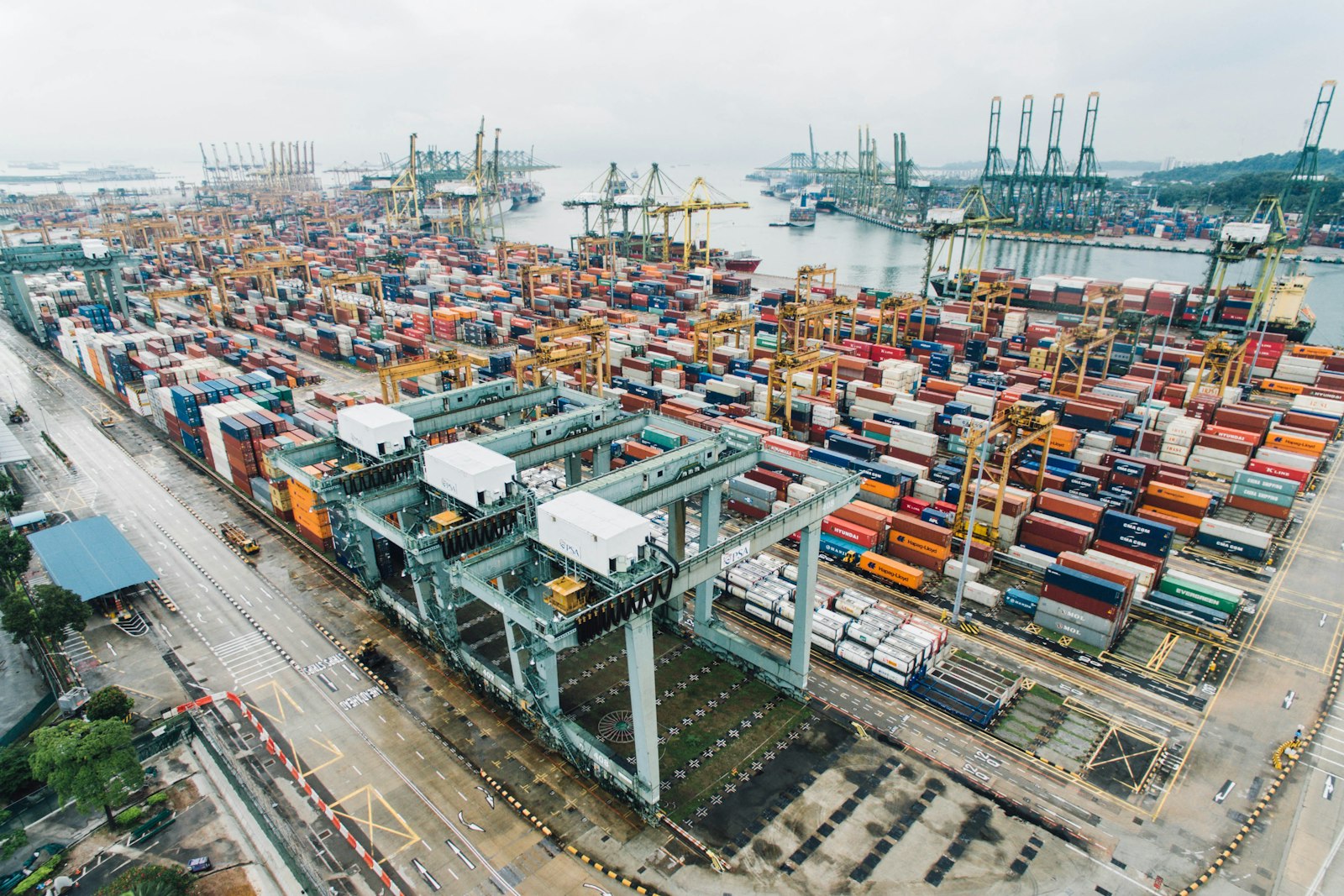
We manufacture at our plant in Balakong, Selangor — around 40 minutes from Port Klang, Malaysia's largest seaport, and under an hour from KLIA's air cargo terminals. Sea and air export routes to every major market run daily.
Because the material is ISPM-15 exempt, there is no destination country where the packaging itself creates a customs problem — the exemption applies worldwide, which is precisely why exporters adopt it.
Supply can be shipped flat-packed and dense to minimise your inbound freight, as full-container programmes for regular volumes, or consolidated for smaller trial orders. Malaysia's trade agreements across ASEAN, RCEP and beyond keep duties favourable in most destination markets — confirm the tariff treatment for your country with us at quotation.
Frequently asked questions
Can you export honeycomb packaging to my country?
Yes. We ship worldwide from Malaysia via Port Klang (sea) and KLIA (air). Because paper honeycomb is exempt from ISPM-15, the packaging clears customs in every market without phytosanitary documentation. Send us your destination and volumes and we will confirm logistics and landed cost.
What is the minimum order for international buyers?
Trial orders and sample kits are deliberately accessible — we would rather you test the material than take our word for it. For ongoing supply, full-container or consolidated programmes are quoted against your volumes; flat-packed shipping keeps inbound freight efficient.
How does honeycomb packaging help our ESG reporting?
Three measurable ways: packaging becomes a single recyclable material (reportable as recycled rather than landfilled), EPR and PPWR-style fees drop into the lowest material bands, and the tare-weight reduction cuts freight emissions per shipment — quantifiable from your own freight data.
Start with a spec, not a commitment
Send your cargo details and destination country. You will get an engineered specification, a quote with export logistics, and a sample kit to test.