Honeycomb Board for Architectural Models, Prototypes and Studios
Foam board dents and bows, MDF needs dust extraction and plywood eats the budget. Model shops are cutting massing models, sections and full-size mock-ups from a kraft board that stays flat and goes in the recycling bin.
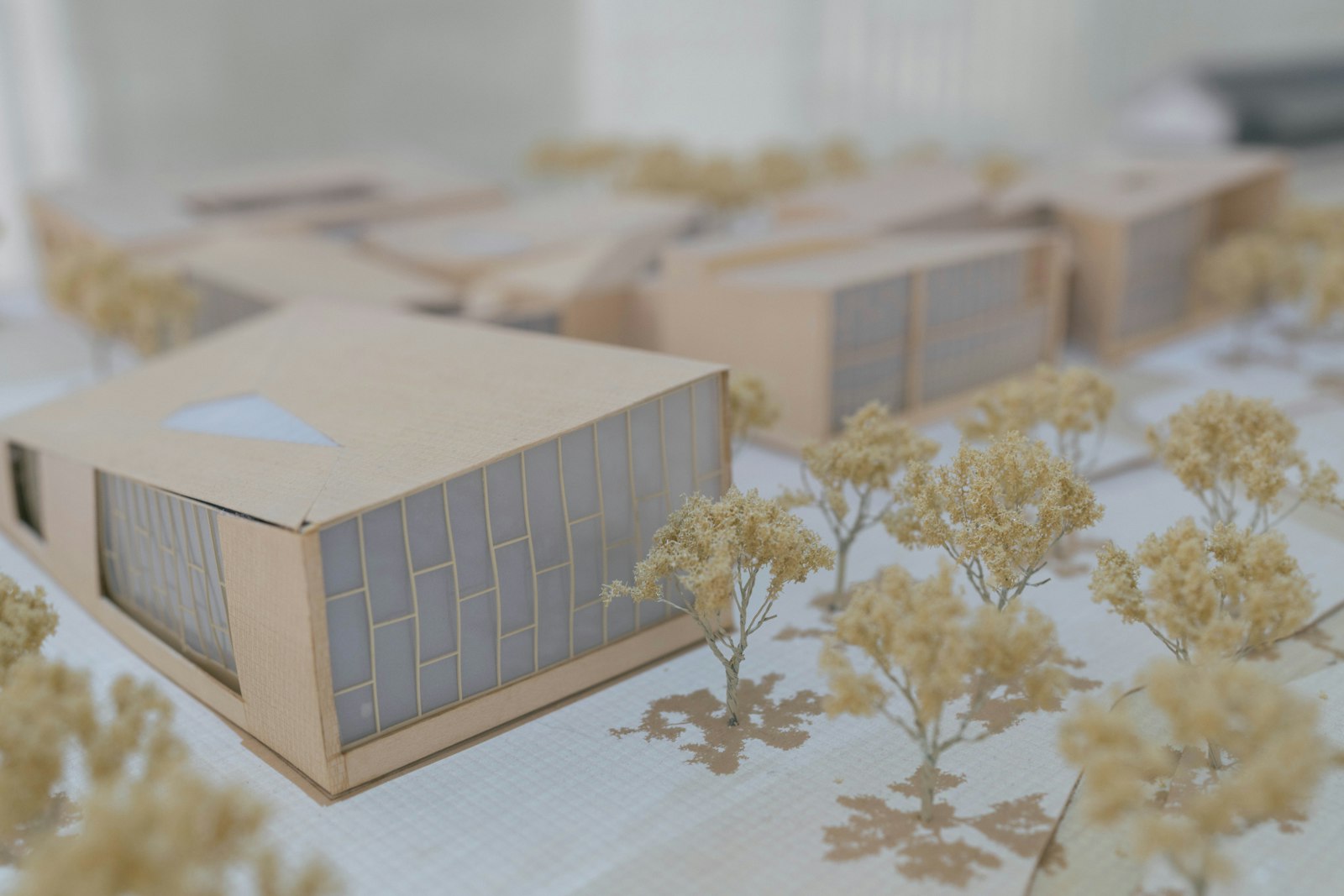
Honeycomb board for architectural models works because it is thick, flat, light and easy to cut with a knife or a fine saw. A 10mm to 50mm sheet gives a massing model or a site model its height in one piece, layers cleanly for contours and building sections, and takes PVA glue or a hot-glue gun without special tools. It is far lighter than MDF, does not bow like foam board, and the offcuts go into ordinary paper recycling.
This article is written for architecture schools, design studios and product teams: how thick sheet is cut, layered and glued for massing models, site models, 1:50 building sections, furniture mock-ups and full-size product form studies; what it costs per project against foam board, MDF, balsa and plywood; and where it is the wrong choice.
How to cut, layer and glue honeycomb board for architectural models
A sharp snap-off knife cuts 10mm to 20mm sheet in a few passes; thicker board takes a fine-tooth hand saw, a band saw or a CNC router. Keep the blade vertical and work on a cutting mat so the edge stays square, which matters when two blocks meet at a corner. For a site model, cut each contour from sheet the thickness of the contour interval and stack the layers; for a 1:50 building section, cut floor plates and walls from thinner sheet and glue them to a thick base.
PVA wood glue bonds kraft face to kraft face under clamps or a weight; a hot-glue gun is faster for quick massing studies. The hexagonal cells exposed on a cut edge can be left visible, filled, or capped with a strip of card or kraft tape. The face takes pencil, marker, spray paint and acrylic; prime it first if you plan to use wet media, because the surface is paper.
Why studios choose it over foam board, MDF and plywood
Foam board is the studio default and its problems are familiar: it bows once a panel is larger than a small sheet, it dents at the first knock, and it cannot be recycled. MDF is flat and dense but heavy, and cutting it means a dust mask and extraction. Balsa and plywood cut well but cost more per sheet and need a workshop. Honeycomb board sits between them: rigid enough for a full-size furniture mock-up, light enough for one student to carry a 1.2m base to a review, and clean to cut with hand tools in a studio.
Because a sheet runs up to 2.4m x 1.2m and up to 50mm thick, a full-size product form study (a chair seat, a console, a cabinet front) can be built from a few pieces rather than laminated from many thin layers. That is where the material saves the most time.
What it costs per project, honestly
Per sheet, honeycomb board costs more than foam board and less than plywood or MDF of similar thickness. Per project it usually comes out cheaper. Rebuilds fall, because the model does not bow or dent between the first pin-up and the final review. There is no dust extraction, no saw bench and no two-person carry, which matters in a shared studio. Offcuts go into ordinary paper recycling instead of the general waste skip.
Illustrative scenario: a studio of thirty students, each building a 600mm x 600mm site model and a 1:50 section. On foam board, a share of those models is rebuilt after warping or damage; on honeycomb board they last the semester and the sheet count is lower. The saving is in remakes and time, not in the price of the sheet.
Where it is the wrong choice
Fine detail. A honeycomb sheet is a kraft face over hexagonal cells, so it cannot be carved into thin mullions, balustrades or small components; make those in card, foam or 3D print and mount them on a honeycomb base. Damp conditions: keep the model dry, because standard honeycomb is paper; a coated or laminated build handles humidity, but a model that will sit outdoors belongs on plastic or treated plywood. Wet media: prime the face before watercolour, thin acrylic wash or plaster, or the paper will soften and ripple.
Frequently asked questions
Is honeycomb board good for architectural models?
Yes, for massing models, site models, building sections and bases. It is thick, flat and light, cuts with a knife or a fine saw, layers for contours and takes PVA or hot glue. It is not suited to fine detail such as mullions or balustrades, so combine it with card or foam for the small parts.
How do you cut and glue thick honeycomb board for models?
Cut 10mm to 20mm sheet with a sharp snap-off knife in a few passes, blade vertical, on a cutting mat. Thicker board takes a fine-tooth hand saw, band saw or CNC router. Glue kraft face to kraft face with PVA under light weight, or use a hot-glue gun for fast massing studies. Cap open edges with card or kraft tape.
Where can architecture schools in Malaysia buy honeycomb board for models?
phb manufactures paper honeycomb board in Balakong, Selangor, in thicknesses from 10mm to 50mm and sheet sizes up to 2.4m x 1.2m. Architecture schools, design studios and model shops across the Klang Valley can order sheets or ask for a sample kit first; message WhatsApp +6016-891 6381 with the thickness and quantity you need.
Build your next model on our sheet
Tell us the scale, the thicknesses you use and how many sheets a semester or a project needs. We will send a sample kit so your studio can cut, glue and finish it before ordering.